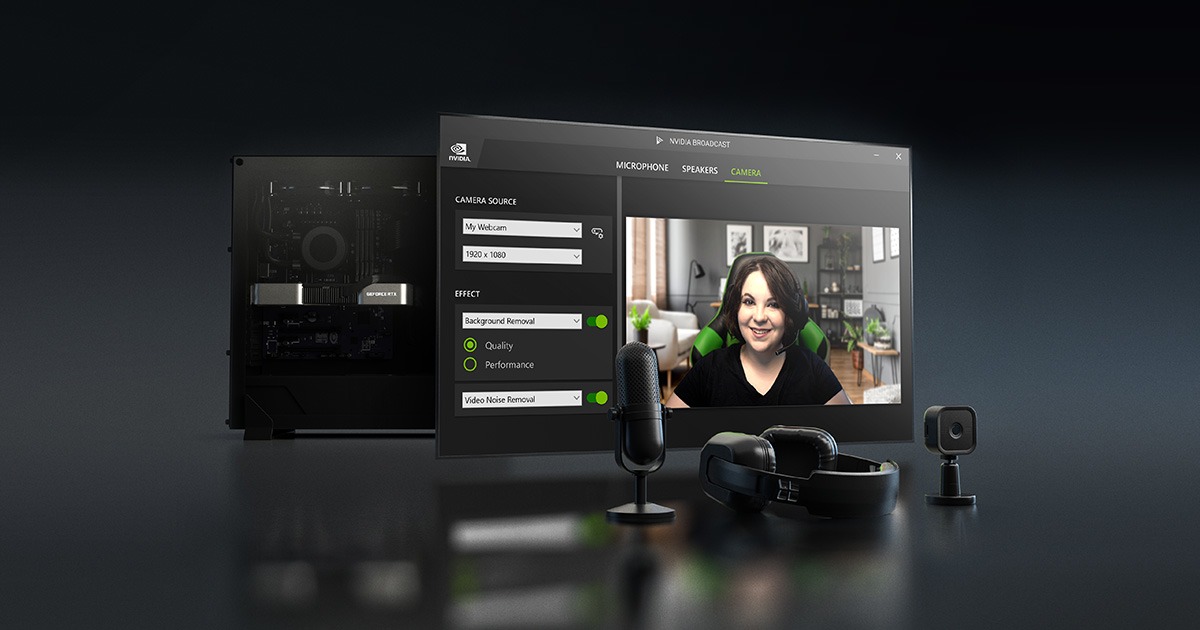
In today's digital world, crystal-clear audio is no longer a luxury; it's a necessity. Whether you're a burgeoning livestreamer, a seasoned content creator, or a remote professional, the quality of your microphone can make or break your message. The good news? You don't need a professional recording studio or an arsenal of expensive equipment to achieve broadcast quality streaming microphone audio. Thanks to NVIDIA Broadcast, powered by the AI capabilities of RTX GPUs, you can transform virtually any microphone into a high-fidelity audio powerhouse, ready for calls, streams, and recordings.
The NVIDIA Broadcast app harnesses the power of AI to elevate your audio and video, turning your home office or gaming den into a professional studio. By leveraging dedicated AI processors called Tensor Cores on NVIDIA RTX GPUs, the app performs real-time enhancements that traditionally required specialized hardware or meticulous post-production. It's a game-changer for anyone seeking to make a lasting impression with their voice.
Transform Any Mic into a Broadcast Quality Streaming Microphone with AI
The core magic of NVIDIA Broadcast lies in its AI-powered features designed to tackle the most common audio challenges. Imagine delivering a presentation or stream without the distracting hum of your PC fan, the clatter of your keyboard, or even the unexpected bark of a pet in the background. NVIDIA Broadcast makes this a reality, converting your standard setup into a true broadcast quality streaming microphone solution.
Unrivaled Noise and Echo Removal
One of the most celebrated features is the AI noise removal. This isn't just a simple gate; it's an intelligent system that identifies and isolates human speech from unwanted environmental sounds. The app effectively eliminates a wide array of background noises, ranging from the mundane — like a whirring air conditioner or traffic outside your window — to the chaotic, as demonstrated by one user who successfully silenced an eight-year-old's tantrum and a noisy robot car, making every "I'm not going to bed" whine disappear from the recording. This capability applies to both your microphone input and even inbound audio, ensuring a clean listening experience for you too.
Beyond noise, NVIDIA Broadcast also tackles the pesky problem of room echo. Many home setups lack proper acoustic treatment, leading to audio that sounds hollow or distant. The AI-powered room echo removal intelligently processes your audio to dampen reverberations, making your voice sound clearer, fuller, and much more professional. For streamers and podcasters, this means a significant upgrade to their audio presence, allowing them to deliver content with the clarity of a professional studio setup. This crucial feature contributes significantly to achieving pro streamer audio.
Virtual Device Integration for Seamless Use
How does it all work? NVIDIA Broadcast operates by creating virtual microphone, speaker, and camera devices within your Windows operating system. Once set up, you simply select "Microphone (NVIDIA Broadcast)" as your input device in any broadcasting, video conferencing, or voice chat application. This includes popular platforms like OBS Studio, Discord, Google Meet, Microsoft Teams, Slack, Webex, and Zoom. This seamless integration means you configure your audio enhancements once within the Broadcast app, and they're applied across all your communication and streaming software, providing a consistent, high-quality audio experience every time.
Step-by-Step: Setting Up Your NVIDIA Broadcast Microphone
Getting started with NVIDIA Broadcast is remarkably straightforward. Here’s how to configure your microphone for optimal performance:
- Prerequisites: Ensure you have an NVIDIA RTX GPU (GeForce RTX or NVIDIA RTX) and the NVIDIA Broadcast app installed on your Windows PC. The Tensor Cores on these GPUs are essential for the real-time AI processing.
- Launch the App: Open the NVIDIA Broadcast application. You'll see sections for Microphone, Speaker, and Camera.
- Select Your Input Microphone: In the "Microphone" section, use the dropdown menu to select your physical microphone. This is the actual microphone you'll be speaking into (e.g., your headset mic, USB mic, or webcam mic).
- Apply AI Effects: Below your microphone selection, you'll find the "Effects" panel.
- Noise Removal: Toggle this on to eliminate background noise. You can adjust the "Strength" slider to fine-tune how aggressively the AI filters out noise. Start with a moderate setting and increase if needed.
- Room Echo Removal: Enable this to reduce echoes and reverberations in your room. Like noise removal, there's a "Strength" slider for adjustment.
- Note: The app allows combining multiple effects, but keep an eye on the "GPU Utilization" indicator in the settings. Enabling too many effects might consume significant GPU resources. Also, not all effects can be combined; for instance, "Studio Voice" often can't be used simultaneously with basic noise reduction as they may conflict in processing your voice.
- Configure Windows Sound Settings (Optional but Recommended): For global application of your enhanced audio, go to your Windows sound settings. Under "Input," select "Microphone (NVIDIA Broadcast)" as your default input device. This way, any application that defaults to your system's microphone will automatically use the AI-enhanced version.
- Configure Individual Applications: If you don't set it as default in Windows, or if an app overrides default settings, open your streaming, conferencing, or chat application (e.g., OBS Studio, Zoom, Discord). In its audio settings, ensure you select "Microphone (NVIDIA Broadcast)" as your input device.
- Test Your Audio: Critically, test your setup. Record a short clip or make a test call while deliberately introducing some background noise (e.g., typing, fan noise) to hear the AI in action. Adjust the strength sliders in the Broadcast app as necessary until your voice sounds clear and free of distractions.
Maximizing Performance and Audio Fidelity
While NVIDIA Broadcast is designed for ease of use, a few pro tips can help you squeeze every drop of performance and achieve the absolute best audio quality for your broadcast quality streaming microphone setup.
Resource Management and Effect Combination
The beauty of NVIDIA Broadcast is its real-time processing, but this does utilize your GPU's Tensor Cores. Keep an eye on the GPU Utilization indicator within the Broadcast app's settings. If you notice high usage impacting game performance or other GPU-intensive tasks, consider disabling non-essential effects. Prioritize noise and echo removal if they are your main concerns.
When combining effects, be mindful. While you can often layer noise and echo removal, some more advanced vocal processing effects (like Studio Voice, if available in your version) might not coexist well with basic noise reduction. Experimentation is key to finding the sweet spot for your unique voice and environment.
The "Double-Dipping" Pitfall: Disable Redundant Effects
A common mistake that can lead to garbled or unnatural-sounding audio is applying noise cancellation twice. Many applications (like Discord, Zoom, or even some microphone drivers) have their own built-in noise suppression features. If you enable both NVIDIA Broadcast's noise removal and an application's native noise cancellation, the two systems can conflict, often resulting in distorted audio or a complete failure of the effect. The golden rule is: choose one primary noise reduction solution. For superior results, we highly recommend disabling other similar effects in your apps and drivers and letting NVIDIA Broadcast handle the heavy lifting.
Beyond Live: Post-Processing Power
The AI-powered audio technology behind NVIDIA Broadcast isn't just for live streams and calls. NVIDIA offers this technology as a Software Development Kit (SDK) to developers. Audiovisual companies like Elgato have integrated Maxine’s AI audio noise removal technology into their products. This means content creators can use plug-ins or Elgato’s virtual studio technology (VST) filters to clean up noise and echo from recordings in post-processing. This is incredibly valuable in video editing suites like Adobe Premiere Pro or digital audio workstations like Ableton Live and Adobe Audition, ensuring that even pre-recorded content benefits from the same high-quality audio enhancement.
Beyond Noise: The Power of a Virtual Broadcast Quality Streaming Microphone
NVIDIA Broadcast transcends simple noise gates and basic filters. It's an intelligent platform that leverages cutting-edge AI to provide studio-grade audio enhancements accessible to everyone with an RTX GPU. This democratizes professional audio, enabling aspiring streamers, podcasters, and remote workers to sound their best without investing in expensive acoustic treatments or high-end condenser microphones often required for true broadcast quality streaming microphone performance.
The consistent, clean audio it provides builds trust and professionalism, ensuring your audience or colleagues focus on your message, not your environment. In a world increasingly reliant on digital communication, the ability to present yourself with clarity and confidence is invaluable.
In conclusion, NVIDIA Broadcast offers an unparalleled solution for achieving broadcast quality streaming microphone audio. By transforming any ordinary microphone into an AI-powered audio device, it eliminates distractions, enhances clarity, and elevates your overall presence in calls, streams, and recordings. With a simple setup and intelligent real-time processing, it's an essential tool for anyone serious about their digital audio footprint. If you have an RTX GPU, leveraging NVIDIA Broadcast is one of the most impactful upgrades you can make to your audio setup today.